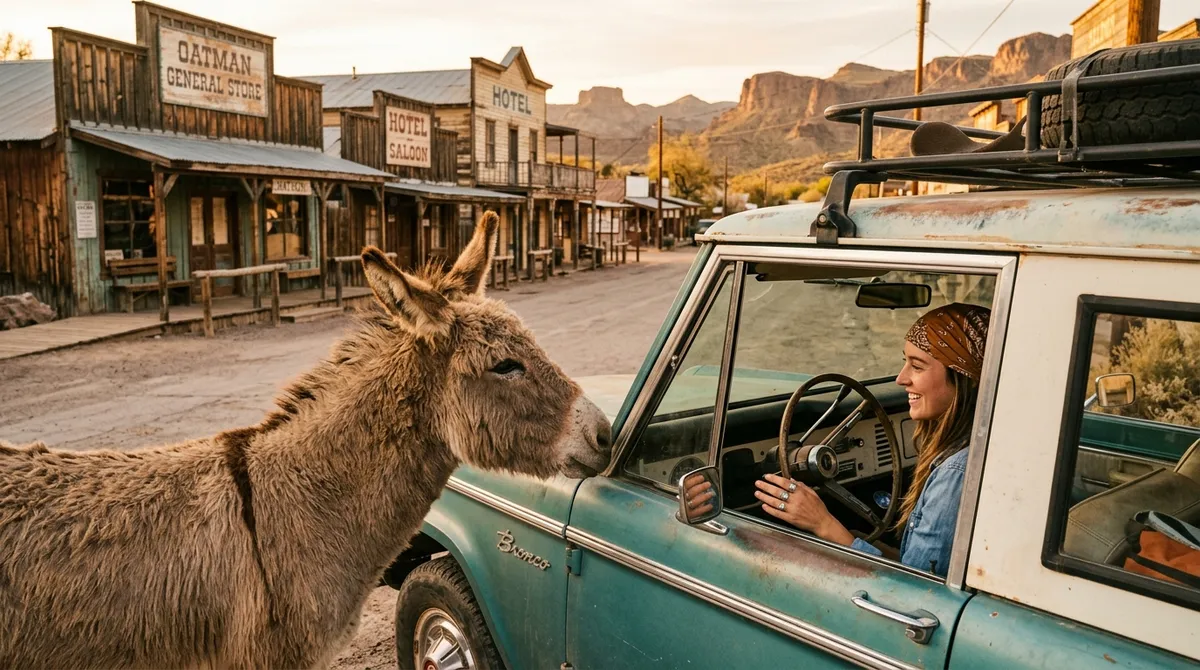
The first thing that happens when you drive into Oatman is that a wild burro walks up to your car window.
He'll be expecting carrots. He'll know exactly how to angle his head into the driver's-side window to get the best look at what you might have on the passenger seat. He has done this hundreds of times. He is not in a hurry.
This is Oatman, Arizona — a former gold mining town turned permanent Route 66 oddity, where the wild burros outnumber the residents and the entire 200-person town is essentially one block of saloons, gunfight reenactments, and rusted mining equipment. It's the strangest stop on the Mother Road, and one of the most genuinely fun.
Here's how to do it.
The Drive In — Don't Underestimate It
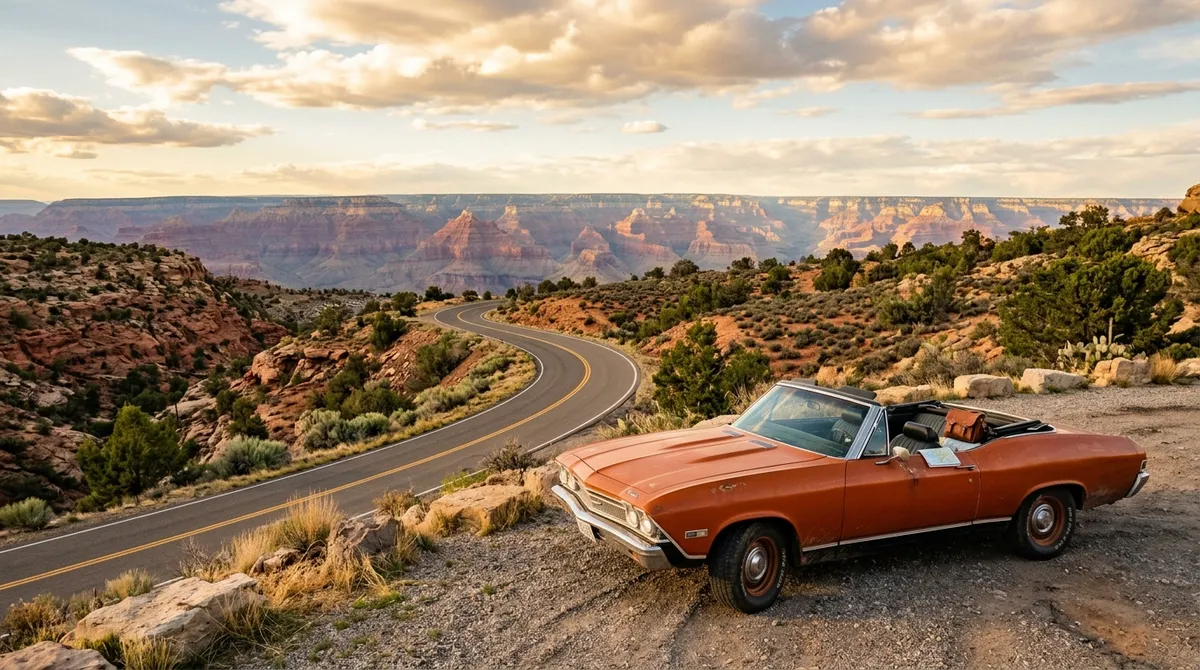
Getting to Oatman is half the experience. The town sits in the Black Mountains of western Arizona, and the road to reach it is one of the last unaltered stretches of original Route 66 — a narrow, twisting, switch-backing climb up and over the mountains, with no guardrails, hairpin turns, and steep drops.
This is the road that drove RV drivers crazy in the 1940s and 1950s and was one of the main reasons travelers welcomed the I-40 bypass. Today, it's a thrill ride — slow, scenic, and unforgettable.
Drive carefully. The locals know the road; you don't. There are pullouts roughly every mile if you want to stop for photos or let faster drivers pass. Sunrise and sunset light on the Black Mountains is stunning.
The Burros
The burros are descended from pack animals abandoned when the gold mines closed in the 1940s. They've been wild ever since, but they've also figured out that humans bring food, and they treat downtown Oatman as a permanent buffet.
Some rules:
You can feed them, but only with approved feed. Shops in town sell small bags of hay cubes for $1 — that's the only food you should give them. Carrots are okay, but anything processed (chips, bread, sugar) is bad for them.
Don't touch the foals. Baby burros wear small "DO NOT FEED" stickers on their foreheads. The mothers will let you pet them, but the foals are still nursing and food can make them sick.
They will absolutely come up to your car. Roll down the window if you want to interact. They're gentle but they're not pets — keep small kids supervised and don't get between a mother and a foal.
The Town
Oatman is one main street, about three blocks long. Walking the whole thing takes 20 minutes if you don't stop. With stops, plan 1.5–2 hours.
What's there:
The Oatman Hotel. Built 1902. Clark Gable and Carole Lombard honeymooned here in 1939 after their wedding in Kingman — the room is preserved upstairs and you can walk through it. The downstairs bar/restaurant is plastered with thousands of dollar bills (every visitor signs one and tacks it up), the food is decent, and the burros sometimes wander through the dining room.
The Old West gunfight. Every day at noon and 2pm, a troupe of local actors stages a high-noon gunfight in the middle of the main street. It's free, mildly cheesy, and exactly what a Route 66 stop should be. Stand on the sidewalk and watch.
Various shops and saloons. Most sell predictable Western-themed stuff (cowboy hats, leather goods, "I was here" t-shirts), but a few have genuinely interesting mining-era artifacts. The Oatman General Store has good local jerky and the best selection of postcards.
The Olive Oatman exhibit. The town is named after a 13-year-old girl who survived a brutal massacre in 1851, was taken in by the Mojave tribe, and lived with them for years before being returned to white society — her face was tattooed in the traditional Mojave way. It's a complicated, fascinating story, and a small exhibit in town covers it.
Where to Eat
The Oatman Hotel restaurant. Burgers, chili, the basics. Surrounded by walls of signed dollar bills.
Olive Oatman Restaurant & Saloon. Slightly bigger menu, also covered in dollar bills.
There are no fancy options here. You're eating burgers, you're eating fast, and you're moving on.
Where to Sleep (Hint: Don't)
Oatman has no real lodging — the Oatman Hotel rents a couple of rooms but they're more historical curiosities than comfortable stays. Sleep in Kingman (28 miles east) and visit Oatman as a day trip.
Kingman is itself a great Route 66 stop: the Powerhouse Visitor Center & Route 66 Museum has the best Route 66 museum on the road. Stay at the Hotel Brunswick (a beautifully restored 1909 hotel) or the Best Western Plus King's Inn.
Practical Tips
Open daily, peak crowds 10am–3pm. Arrive before 10 or after 3 if you want a calmer experience.
The road is the experience. Even if Oatman itself doesn't grab you, the Black Mountains drive is one of the great Route 66 experiences. Allocate 90 minutes for the drive each way, even though it's only 28 miles.
Heat is serious in summer. Oatman sits in a desert valley. July and August afternoons hit 110°F regularly. Bring water, sun protection, and avoid mid-afternoon visits in summer.
RVs and trailers should not attempt the Oatman road. The grade and switchbacks are brutal. If you're towing, drive I-40 to Kingman and skip Oatman, or unhitch and drive in with just the truck.
Bring small bills. Tips, snacks, parking donations, and the burro feed all run on cash.
Don't pet random burros from behind. They kick. Approach from the side, let them see you, and give them a beat to decide if they want attention.
Back to the Pillar
Oatman is stop nine of ten. See the full route here: Most People Drive Route 66 Wrong. These Are the 10 Stops That Matter.
Next stop: Santa Monica Pier, California — the finish line of the Mother Road.