When I-40 bypassed Seligman, Arizona in September 1978, the town should have died.
Route 66 traffic was its entire economy — gas stations, motels, diners, all of them suddenly cut off from the new interstate. Within months, businesses started closing. Property values collapsed. The town was on its way to becoming another desert ghost.
Then a local barber named Angel Delgadillo got mad.
He organized a meeting at his shop, gathered every business owner he could, and pushed the Arizona state government to designate the old Route 66 alignment a Historic Route. In 1987, Arizona became the first state to do it. Other states followed. The road was saved, the Historic Route 66 Association was born, and Seligman became its spiritual capital.
This is why Seligman matters.
What's Actually There
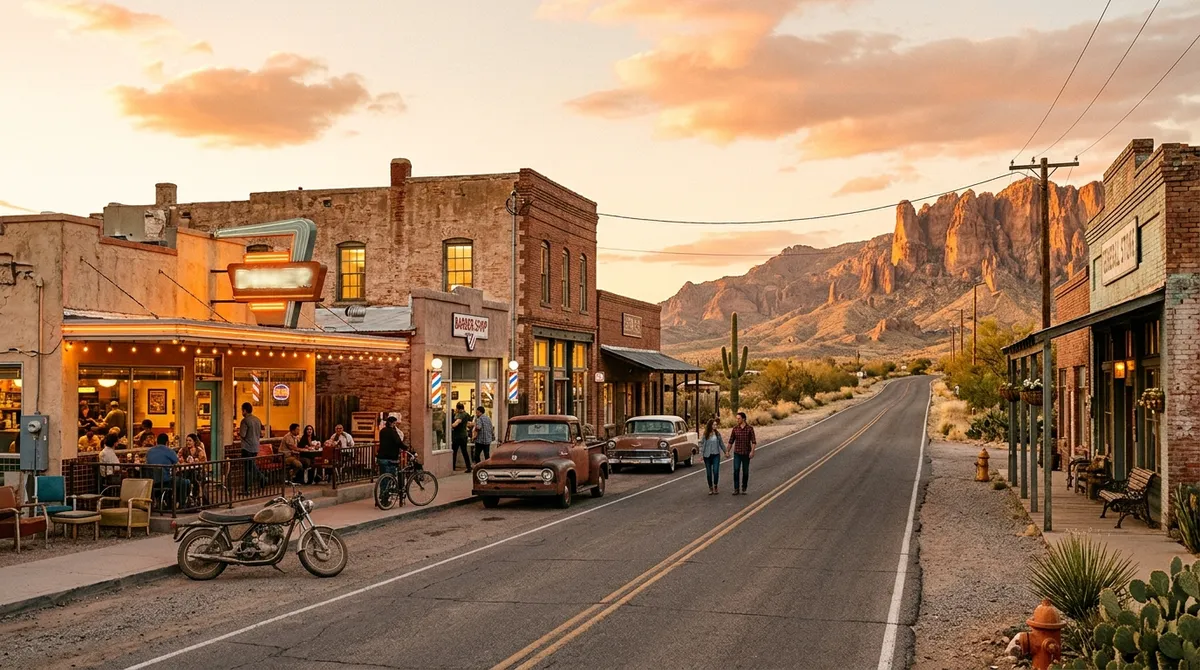
Seligman is one block long. That's it. A single strip of pre-war storefronts, neon signs, repainted gas stations, hand-painted murals, and the most concentrated Route 66 nostalgia you can find anywhere on the road. It takes 90 minutes to see all of it — and you should spend every one of those minutes.
The town is intentionally preserved in its late-1950s look. Angel Delgadillo (who is still alive, well into his 90s) and his brother Juan (who passed in 2004) leaned into the kitsch and turned Seligman into a working time machine.
Angel and Juan's Place — Visit Both
Angel Delgadillo's Original Route 66 Gift Shop & Visitor Center. Still operating. Angel himself is occasionally there in the late mornings — well into his 90s, he still chats with travelers. The shop is in his original barbershop building, and his barber chair is still in the front room. He'll sign your map if you bring one.
The Snow Cap Drive-In. Juan Delgadillo's roadside burger joint, opened in 1953. Famous for two things: the "cheeseburger with cheese" (you ask for it, the staff makes a big deal of confirming you really want cheese on your cheeseburger, then serves a cheeseburger) and the family's tradition of harmless practical jokes on every customer — fake ketchup squirters, hidden straws, a door knob that doesn't quite work. It's not for everyone, but it's exactly what made the Mother Road's roadside diners legendary. The cheeseburgers and root beer floats are excellent.
The Roadside Photo Stops
Walk the single block of downtown Seligman and you'll find:
- A row of mannequins, statues, and fake police officers posed along the storefronts, all painted up in 1950s costumes
- The Historic Seligman Sundries building — a 1904 general store, still operating as a gift shop
- A working 1950s gas station facade with antique pumps
- A rusted old fire truck parked permanently in the middle of the strip
- Murals on every available wall
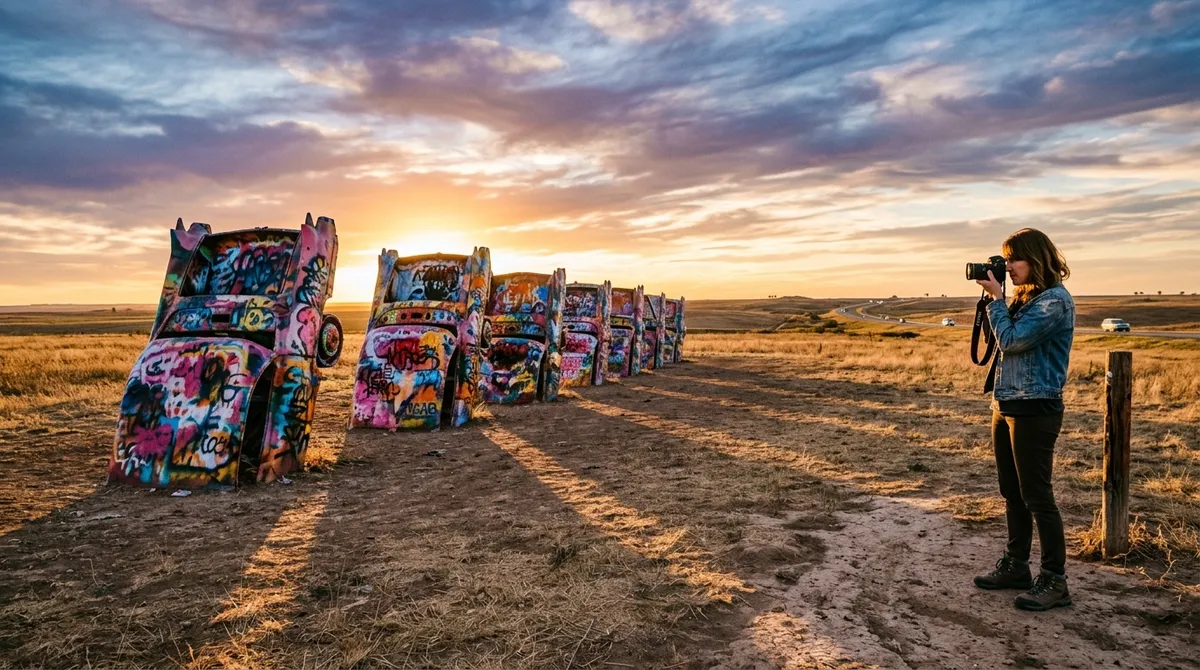
It's photogenic in a way few towns on Route 66 still are. You'll fill a camera roll.
Where to Eat (Besides the Snow Cap)
Westside Lilo's Cafe. Genuine German food in the middle of Arizona — schnitzel, bratwurst, strudel. Sounds wrong, tastes great. Run by a German family that settled here in the 1980s.
The Roadkill Café. Theme restaurant with menu items like "Splatter Platter" and "Center Line Bovine." It's a gimmick, but the food is decent and the kids will love it.
Where to Sleep
Seligman is small. Two main options:
Historic Route 66 Motel. The original Seligman motel, simple but charming, with murals on every door.
Supai Motel. Vintage neon sign, small rooms, very affordable. Both are clean, simple, and exactly what you want from a Route 66 night.
If you want more options, sleep in Williams (40 miles east) or Kingman (90 miles west).
How the "Cars" Movie Connects
If Seligman feels familiar even though you've never been, here's why: Pixar's "Cars" (2006) is heavily based on Seligman. Director John Lasseter drove Route 66 with Michael Wallis (the historian who voiced the Sheriff in the film) during research, met Angel Delgadillo, and modeled the fictional town of "Radiator Springs" partly on Seligman, partly on a few other Route 66 stops. The barber-shop scenes in "Cars" are a direct homage to Angel.
The town has leaned into the connection — you'll see "Cars" memorabilia everywhere — but it's earned, not invented.
Practical Tips
90 minutes is the right amount of time. Don't blow through in 10 minutes, don't plan a whole day. Park, walk both sides of the strip, eat at the Snow Cap, take photos, buy something at Angel's shop, drive on.
Bring cash for tips. Most places take cards but tips for the older shop owners (most of whom are family of the original founders) mean something here.
Open year-round but slow in winter. Many shops have shorter hours November–February. Summer is peak season.
It's quieter in the late afternoon. Tour buses come through in the morning. After 3pm, you'll have the town mostly to yourself.
Don't miss the Burma-Shave signs. West of Seligman, on the original Route 66 alignment toward Kingman, you'll pass a series of small, sequential Burma-Shave signs — a vintage roadside advertising format that used 5–6 rhyming signs spaced along the road. It's pure Mother Road and almost extinct anywhere else.
Back to the Pillar
Seligman is stop eight of ten. See the full route here: Most People Drive Route 66 Wrong. These Are the 10 Stops That Matter.
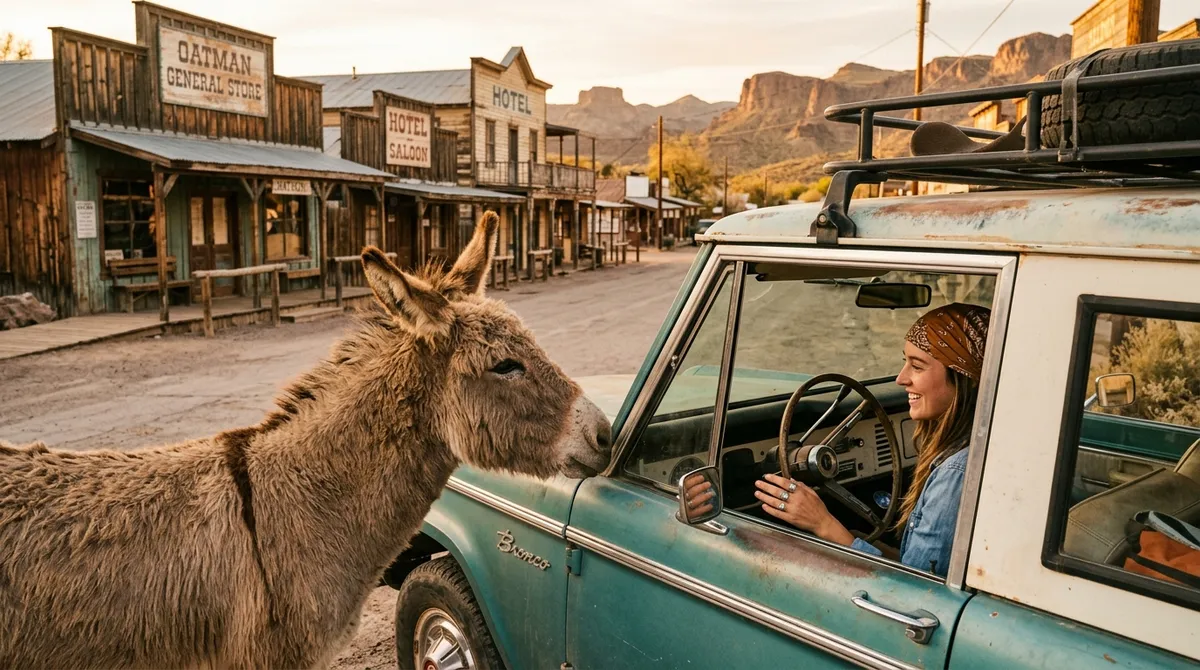
Next stop: Oatman, Arizona — the burro ghost town in the Black Mountains.